Our Certifications &
Credentials
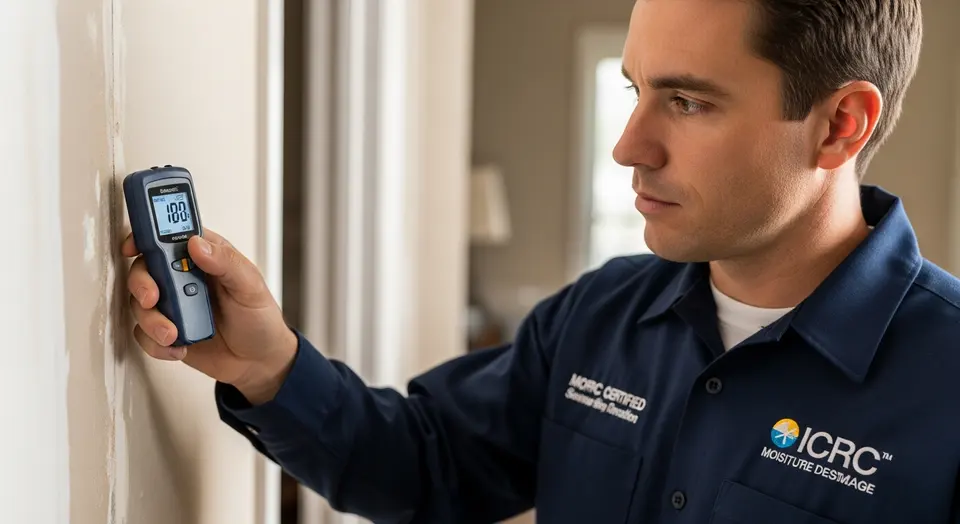
Every technician on our team is certified by the IICRC — the industry's highest standard. Our credentials aren't just plaques on the wall; they represent real training that protects your property.
(512) 222-8357Why Certification Matters When Choosing a Restoration Company
Water damage restoration is a technical profession. Without proper training, well-meaning crews can leave hidden moisture behind walls, fail to prevent mold growth, damage expensive materials, or produce documentation that causes insurance claims to be delayed or denied.
The IICRC (Institute of Inspection, Cleaning and Restoration Certification) sets the global standard for restoration. Their S500 and S520 standards define exactly how water damage must be assessed, dried, and documented. When you hire an IICRC-certified firm, you're hiring a team trained to that standard.
Our Active Certifications
Eight active certifications covering every aspect of water damage restoration, mold remediation, and safety.
The IICRC is the gold standard certification body for water damage restoration professionals worldwide. As an IICRC Certified Firm, we are required to employ certified technicians, follow IICRC S500 and S520 standards, maintain a code of ethics, and carry proper insurance. This certification is not automatic — it must be earned and renewed.
When you hire an IICRC Certified Firm, you know the work will be done to the industry's highest documented standards — not guesswork.
- Employ IICRC-certified technicians
- Follow IICRC S500 Water Damage Restoration Standard
- Maintain commercial general liability insurance
- Adhere to IICRC code of ethics
- Pass annual firm certification review
The WRT (Water Damage Restoration Technician) certification is the foundational IICRC credential for water damage restoration professionals. It covers the science of drying, water categories and classes, extraction methods, moisture measurement, equipment placement, and documentation. Every technician on our team holds this certification.
A WRT-certified technician understands the physics of drying and knows how to build a proper drying system — not just run fans and hope for the best.
- Completion of IICRC WRT course and examination
- Understanding of psychrometrics and drying science
- Knowledge of water categories (1, 2, 3) and classes (1-4)
- Proper moisture measurement and documentation techniques
- Must be renewed every 4 years with continuing education
The ASD (Applied Structural Drying) certification is an advanced IICRC credential that goes beyond the WRT. It focuses specifically on drying building assemblies — walls, floors, ceilings — using psychrometric data to precisely calculate and monitor the drying process. ASD technicians set up scientifically-calibrated drying systems, not just place equipment randomly.
Proper structural drying requires understanding how moisture moves through building materials. ASD techs use data — not guesswork — to dry your structure efficiently and completely.
- Must hold current WRT certification as a prerequisite
- Advanced training in psychrometrics and drying calculations
- Proficiency in moisture measurement and equipment calibration
- Understanding of drying goals for various building materials
- Written and practical examination required for certification
The CDS (Commercial Drying Specialist) certification covers the unique challenges of large-scale commercial water damage restoration. Commercial properties — office buildings, warehouses, retail stores, multi-family buildings — have very different drying requirements than residential homes. CDS-certified specialists know how to manage large-scale drying jobs efficiently while minimizing business disruption.
Commercial water damage requires specialized knowledge, equipment, and project management. A CDS-certified specialist ensures your commercial property is restored properly and quickly.
- Must hold current WRT and ASD certifications
- Training in large-scale drying equipment and systems
- Commercial building construction and materials knowledge
- Project management for multi-room and multi-floor drying
- Understanding of business continuity during restoration
The CMR (Commercial Mold Remediation) certification qualifies technicians to assess, contain, and remediate mold in commercial and residential properties. Mold remediation requires proper containment procedures, safe removal methods, and clearance testing to ensure the problem is fully resolved. Our CMR-certified specialists handle mold of all types and scales.
Improper mold remediation can spread spores throughout a building, making the problem worse. CMR certification ensures mold is removed safely and completely.
- Knowledge of mold biology and health risks
- Proper containment and negative air pressure procedures
- Personal protective equipment (PPE) requirements
- Safe removal and disposal of mold-contaminated materials
- Post-remediation verification testing procedures
The OCT (Odor Control Technician) certification covers the science and practice of eliminating odors caused by water damage, mold, sewage, smoke, and other sources. Sewage backup and mold growth can leave powerful odors that require specialized treatment to fully eliminate. Our OCT-certified technicians use HEPA filtration, hydroxyl generators, ozone treatment, and other proven methods.
Masking odors with deodorizers doesn't solve the problem. OCT-certified techs identify the odor source and permanently eliminate it using the right method.
- Understanding of odor chemistry and molecular structure
- Knowledge of deodorization methods and equipment
- Safety protocols for ozone and chemical deodorization
- Proper application of deodorizing agents
- Air quality testing and verification after treatment
Homes built before 1978 may contain lead-based paint. The EPA's Renovation, Repair and Painting (RRP) rule requires that contractors working in pre-1978 homes be EPA Lead-Safe Certified and use lead-safe work practices. This is especially important during water damage restoration, which often involves disturbing walls and flooring that may contain lead paint.
Lead poisoning is a serious health risk — especially for children. EPA Lead-Safe certification ensures your family is protected during restoration of older homes.
- Completion of EPA-approved Lead-Safe training course
- Annual firm certification with the EPA
- Use of approved lead-safe work practices on all eligible jobs
- Proper containment, cleaning, and waste disposal procedures
- Documentation and record-keeping requirements
OSHA 30-Hour certification demonstrates comprehensive knowledge of workplace safety and health hazards. Water damage restoration involves significant risks — electrical hazards in flooded areas, biohazard exposure from sewage, structural instability after flooding, and chemical exposure from mold treatments. Our supervisors hold OSHA 30-Hour certification to keep our crews and your property safe.
A safe restoration crew is a better restoration crew. OSHA-certified supervisors recognize and mitigate hazards before they become accidents or injuries.
- 30 hours of OSHA safety and health training
- Training in hazard recognition and prevention
- Personal protective equipment (PPE) requirements
- OSHA regulations and compliance requirements
- Refresher training required for renewal
"I specifically called them because they were IICRC certified. My insurance company actually required a certified firm, and they handled everything professionally. The technician showed me his credentials before starting work."
Certified Professionals on Every Job
We don't send uncertified helpers on your job. Every crew that arrives at your property includes at minimum one WRT and ASD-certified lead technician who oversees the entire process from inspection through completion.
Request Certified Service
Get Free Inspection & Estimate
We respond within 60 minutes. Available 24/7.