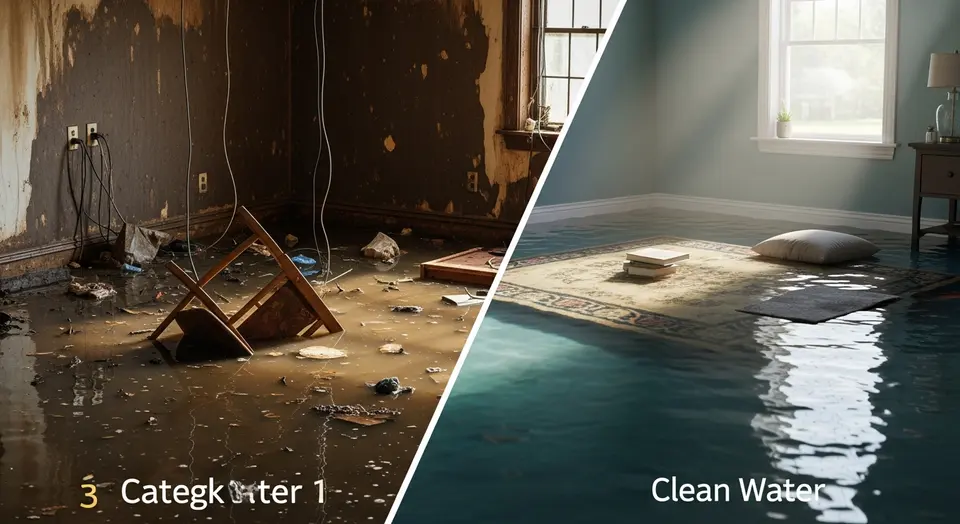
Not all water damage is the same. The category of water determines cleanup procedures, safety requirements, and what can be saved versus what must be replaced. Here's what the classifications mean for your home.
When a restoration technician arrives at your home and says 'this is a Category 2 loss,' do you know what that means? The IICRC (Institute of Inspection, Cleaning and Restoration Certification) classifies water damage into three categories based on the level of contamination in the water. This classification determines how the cleanup is performed, what personal protective equipment is required, what materials can be dried and saved versus what must be removed and replaced, and ultimately, the cost of restoration.
Category 1: Clean Water
Category 1 water originates from a sanitary source and poses no substantial risk to humans. Examples include: supply line breaks, overflowing sinks or bathtubs (before contamination), water heater failures, and rainfall or snow melt entering through a window. Category 1 water can become Category 2 if it contacts contaminated surfaces, is left standing, or is affected by time. For example, clean water sitting on wet carpet for 48 hours in Austin's heat can degrade to Category 2.
- Sources: supply lines, clean appliances, rain water
- Safety: low risk, standard PPE
- Materials: many can be dried in place if addressed quickly
- Cost: typically lowest
Category 2: Gray Water
Category 2 water contains significant contamination that can cause discomfort or sickness if contacted or consumed. Sources include: discharge from dishwashers or washing machines, overflow from toilet bowls with no feces, sump pump failure, hydrostatic seepage (water pressing through walls or floors from groundwater). Gray water contains biological, chemical, or physical contaminants at levels that can cause illness.
- Sources: washing machines, dishwashers, toilet bowl overflow (no feces), sump failure
- Safety: significant health risk, enhanced PPE required
- Materials: carpet and padding typically must be removed, not dried
- Cost: moderate
Category 2 water requires enhanced PPE and proper disposal. Do not attempt DIY cleanup without proper protective equipment.
Category 3: Black Water
Category 3 is grossly contaminated water containing pathogenic agents — bacteria, viruses, protozoa, and other organisms that cause severe illness. Sources include: sewage backup, flooding from rivers or streams (which contain agricultural runoff, chemicals, and biological contaminants), and any water that has been standing long enough to grow bacteria and mold. All flood water from external sources is automatically Category 3 regardless of how it looks.
- Sources: sewage backup, river/creek flooding, heavily contaminated groundwater
- Safety: serious health risk — full PPE required at all times
- Materials: all porous materials (drywall, carpet, insulation) must be removed
- Cost: highest — requires full extraction, demolition, sanitization
Never attempt Category 3 cleanup without professional protective equipment and training. Exposure to sewage or flood water can cause serious illness.
Water Damage Classes: A Different Classification
Separate from categories, the IICRC also classifies water damage into four 'classes' based on the amount of water absorption and rate of evaporation required. Class 1 is minor damage affecting a small area. Class 2 affects an entire room with moisture wicking up walls. Class 3 is the most common serious loss, with water coming from above (ceiling/roof) and affecting walls and floors throughout. Class 4 involves specialty drying for hardwood, concrete, or plaster — materials that hold moisture tightly and require longer drying times.
Why This Matters for Your Insurance Claim
The category and class of your water loss directly affect your insurance claim. Category 3 losses require demolition of drywall and flooring that a Category 1 loss might preserve. Category determines material disposal requirements, drying protocols, and scope of work — all of which appear in your Xactimate estimate. Understanding these classifications helps you have informed conversations with your insurer and restoration contractor.
A certified water damage restoration professional at Austin TX Water Damage, serving Central Texas homeowners and businesses with expert restoration services.
24/7 Emergency Service
Water damage emergency? We respond in 60 minutes, any time of day or night.
(512) 222-8357