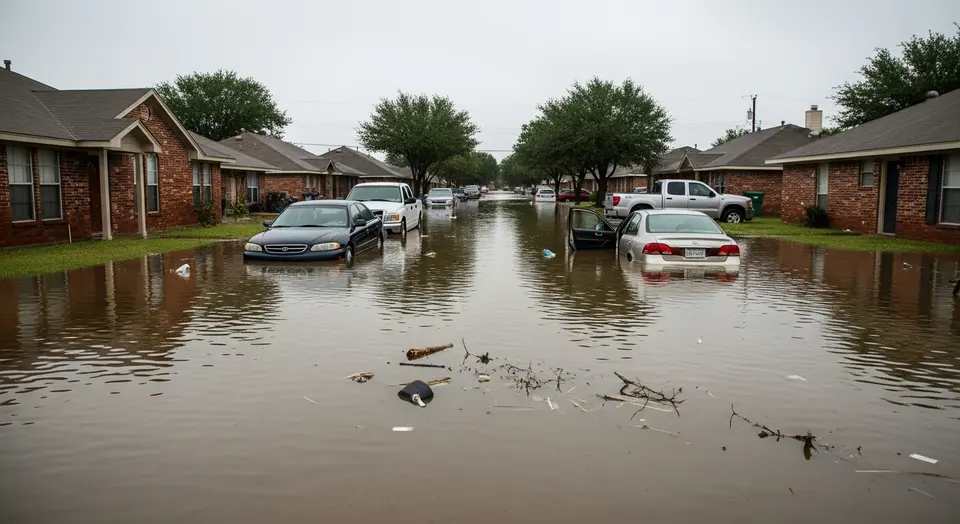
Austin sits in one of the most flood-prone corridors in the United States. Here's what that means for your homeowners insurance — and what most Austin homeowners don't know about their coverage.
Central Texas has earned an uncomfortable nickname: Flash Flood Alley. The region — stretching from Del Rio northeast through Austin and San Antonio — is one of the most flood-prone areas in the entire United States. Austin sits squarely in the middle of this corridor, and the city's limestone terrain, intense storm systems, and dramatic topography make it uniquely susceptible to rapid, catastrophic flooding. What does this mean for your homeowners insurance? Quite a bit — and most Austin homeowners are dangerously underinsured.
The Key Fact Most Austin Homeowners Miss
Standard homeowners insurance does NOT cover flood damage. This is one of the most misunderstood facts in home insurance. If a creek rises and water enters your home, your homeowners policy will almost certainly deny the claim. Flood coverage requires a separate FEMA National Flood Insurance Program (NFIP) policy or a private flood insurance policy. Only about 20% of Austin homeowners in high-risk flood zones carry flood insurance.
Standard homeowners insurance does not cover flooding from external sources — creeks, rivers, storm runoff, or sheet flooding. You need a separate flood insurance policy.
What Homeowners Insurance Does Cover
Your standard homeowners policy typically covers 'sudden and accidental' water damage from internal sources. This includes burst pipes (very common in Austin after freezes like Winter Storm Uri), water heater failures, washing machine overflows, and sudden plumbing failures. What it doesn't cover is gradual damage — a slow leak you ignored for months — or flooding from external water sources.
- Burst pipes from freezing temperatures ✓
- Water heater failures ✓
- Dishwasher or washing machine overflow ✓
- Roof leaks from storm damage ✓
- Flooding from creeks, rivers, or storm runoff ✗
- Gradual leaks or slow damage ✗
- Sewer backup (requires separate endorsement) ✗
Do I Need Flood Insurance in Austin?
FEMA maps designate flood zones across Austin. If your home is in Zone AE, AH, AO, or A, your mortgage lender likely requires you to carry flood insurance. But homes outside designated flood zones still flood — in fact, roughly 25% of all flood insurance claims come from lower-risk zones. The question isn't just 'am I in a flood zone?' — it's 'is my home in Central Texas, which is in Flash Flood Alley?'
Check your flood zone at FEMA's Flood Map Service Center: msc.fema.gov. Enter your address to see your current designation.
The 30-Day Waiting Period
Here's a critical fact: NFIP flood insurance policies have a 30-day waiting period before they take effect. You cannot buy flood insurance when a storm is approaching and expect to be covered. If you don't currently have flood insurance and you live in Central Texas, the right time to get it is now — not when weather forecasters are tracking a storm system.
Sewer Backup: The Coverage Gap You Probably Have
Sewer backup and drain overflow are not covered by standard homeowners policies and are not covered by flood insurance either. They require a separate endorsement, usually added to your homeowners policy for $30–$50 per year. In Austin, where intense rain events regularly overwhelm the city's sewer system and cause backups into homes, this coverage is worth having.
How to Protect Your Insurance Claim After Water Damage
Regardless of the type of water damage, how you document and report it significantly affects your payout. Hire an IICRC-certified restoration company that uses Xactimate estimating software — the same software insurance companies use. This ensures your scope of loss is presented in the exact format adjusters expect. Keep all damaged materials until your adjuster visits. Don't throw anything away.
A certified water damage restoration professional at Austin TX Water Damage, serving Central Texas homeowners and businesses with expert restoration services.
24/7 Emergency Service
Water damage emergency? We respond in 60 minutes, any time of day or night.
(512) 222-8357