Water doesn't care about office hours. Learn simple, Austin-focused steps building owners, property managers, and tenants can use to plan for commercial water damage restoration before the next storm or plumbing failure hits.
Water does not care about office hours. One broken line, one clogged drain, or one heavy spring storm can stop business in a matter of minutes. For Austin office buildings, water damage is not just a mess on the floor; it is lost work time, frustrated tenants, and long cleanup days.
Here in Austin, quick spring storms and aging building systems create a special set of water risks. Unplanned downtime, ruined furniture and electronics, and fast mold growth can hit your bottom line and your reputation. A clear plan for commercial water damage restoration belongs right next to your cybersecurity plan and your fire safety plan.
We want to share simple, Austin-focused steps building owners, property managers, facility teams, and office tenants can use to get ready now, before the next big storm or plumbing problem hits.
Know Your Building's Biggest Water Threats
Austin's spring thunderstorms often show up fast, with heavy downpours that can overwhelm building systems. For offices, some of the biggest outside risks include:
- Roofs that pond water during long rains
- Gutters and downspouts that clog and overflow
- Surface drains that back up around doors and loading areas
- Low parking garages and ground-level suites that take on runoff
Even if your building is not in a mapped floodplain, wind-driven rain can still push water under doors, through weak window seals, and into tiny cracks in the building shell. A short storm can leave standing water in lobbies, elevator pits, and stairwells.
Hidden Internal Risks Inside the Building
Inside the building, hidden problems often cause the worst losses. Common weak spots include:
- Rooftop HVAC condensate lines that clog and overflow into ceilings
- Sprinkler systems with damaged heads or old fittings
- Aging supply lines to restrooms, break rooms, and janitor closets
- Water heaters and storage tanks that leak slowly for days
- Small plumbing leaks inside wall cavities
Slow leaks are especially risky. Water can soak insulation, framing, and ceiling tiles without anyone seeing it. By the time stains show up, mold can already be growing behind the surface.
How Tenant Operations Add Water Risk
Tenant operations also add water risk. Office kitchens, ice makers, water coolers, and dishwashers all need attention. Server rooms and IT closets often have cooling systems that produce constant condensate. Even copy rooms with small sinks or portable appliances can be a source of leaks if no one is watching. Tenants should know to report any damp spots, musty smells, or stains right away, not later when it is convenient.
Build a Practical Office Water Emergency Plan
A simple, clear water emergency plan helps everyone act fast when minutes matter. Start with a basic response path that covers:
- What to do when someone first sees water or a leak
- When and how to shut off the main water supply or local valves
- Who inside the building needs to be notified first
- When to involve emergency services for safety concerns
- When to bring in a commercial water damage restoration team
Keep a 24/7 contact list posted where people will see it, such as mechanical rooms, security desks, loading docks, and main offices. Include backup contacts so the plan does not fall apart if one person is off that day.
Assign Clear Roles Before an Emergency
Clear roles help reduce confusion. Decide in advance:
- Who is in charge of plumbing and system inspections
- Who communicates with tenants during an event
- Who meets the restoration team and walks them through the site
- Who documents the damage with photos, videos, and notes
Front desk and security staff are often the first to notice problems. Train them to spot water intrusion, ceiling sagging, wet carpets, and musty odors, and to treat these as urgent signs, not minor annoyances.
Keep Updated Building Maps
It also helps to keep updated maps of the building that mark:
- Main and local water shutoff valves
- Electrical panels and any pumps or lift stations
- Areas with sensitive equipment such as IT rooms, file storage, and executive spaces
Color-coding high-risk zones makes it easy to see what needs protection first when water shows up.
Essential Prevention Steps for Austin Office Buildings
Prevention is not glamorous, but it is far easier than dealing with a soaked office floor. For Austin offices, regular inspections pay off, especially in the spring when storms are frequent and days are longer. Set a schedule for:
- Checking roofs, gutters, and downspouts several times during storm season
- Clearing leaves and debris from roof drains and scuppers
- Inspecting plumbing lines and fittings in mechanical rooms and above ceilings
- Examining seals around windows, doors, and roof penetrations
- Touching up caulking and weatherstripping where gaps appear
Smart Building Upgrades That Pay Off
Some building upgrades can make a big difference over time. Simple additions like leak detection sensors in restrooms, mechanical rooms, under kitchen sinks, and near water-using appliances can give early warning before a leak turns into a major loss. In lower levels or flood-prone garages, backwater valves and sump pumps with battery backup help keep outside water from backing up inside the building. Improving grading and drainage around the foundation can also help keep rainwater flowing away from doors and walls.
Office Layout and Emergency Tools to Keep On-Site
Inside the office space, small layout choices matter. Keep file boxes, electronics, and other key items stored off the floor, especially on lower levels. Shelving with the bottom shelf open or raised gives a little space between stored items and any water that might come in.
We also suggest keeping some basic emergency tools on site, such as:
- Plastic sheeting and tape to protect desks and equipment
- Wet/dry vacs for small, contained spills
- Mops, squeegees, and buckets
- Flashlights and extra batteries for power loss
These tools help with minor issues and early response, but larger events need professional commercial water damage restoration to fully dry and restore the building.
Rapid Response and Professional Restoration After a Loss
Once water hits the floor, time becomes your biggest challenge. The first day or two after a loss is when you can still prevent deeper structural damage and widespread mold growth. Water that begins as clean can quickly become gray or even black as it picks up dirt, sewage, or other contaminants. The more contaminated the water, the more careful the cleanup must be.
A professional restoration team will usually:
- Stop the source or work with your plumber to do so
- Extract standing water from floors, carpets, and hard surfaces
- Use moisture meters and thermal tools to map where water has traveled
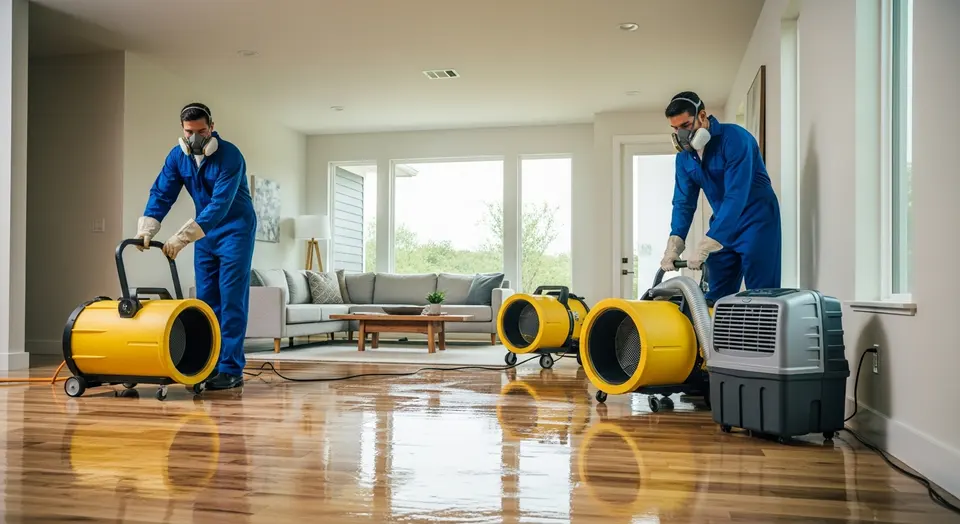
- Set up commercial air movers and dehumidifiers to dry the structure
- Remove damaged materials that cannot be cleaned safely
Office-Specific Restoration Needs
Office buildings also have special needs. Contents handling, document drying, help with electronics, and odor control all matter when you are trying to keep tenants working or get them back into the space quickly and safely.
Documentation Protects Your Claim
From the first sign of damage, good documentation helps protect your business and keeps the insurance claim smoother. Take clear photos and videos, keep basic inventory lists of damaged items, and note when each area was affected. An experienced commercial water damage restoration company can work alongside your team and insurance adjuster, share drying records, and help set realistic timelines for tenants and owners.
Partner With Local Experts Before the Next Storm Hits
For a fast response, it helps to know who you will call before you ever see water on the floor. When you already have a restoration partner listed in your plan and saved in your phones, you save time during a stressful moment. A pre-loss relationship can include simple site walkthroughs, help building your response plan, and even priority service agreements for commercial properties that want an extra layer of security.
As spring storms line up on the calendar, a quick seasonal checklist for Austin office buildings might include:
- Confirm and update emergency contact lists
- Review shutoff maps and field-test key valves
- Schedule roofing, gutter, and drainage inspections
- Walk front desk and security staff through basic water emergency steps
- Review tenant handouts on spotting and reporting water issues
Austin TX Water Damage is based here in the Austin area, and our team works around the clock for local offices that need water extraction, structural drying, mold remediation, sewage cleanup, and full commercial water damage restoration. With some planning, clear communication, and the right partners, your office building can stay safer, more resilient, and ready to keep business going when water tries to interrupt your day.
If your building has water damage, our team at Austin TX Water Damage is ready to act quickly so you can get back to business with minimal interruption. From water extraction to structural drying and full repairs, we handle the entire commercial restoration process and work directly with your insurance carrier. Call (512) 222-8357 — we respond in 60 minutes or less, 24/7.
Call (512) 222-8357A certified water damage restoration professional at Austin TX Water Damage, serving Central Texas homeowners and businesses with expert restoration services.
24/7 Emergency Service
Water damage emergency? We respond in 60 minutes, any time of day or night.
(512) 222-8357