Austin's humid spring turns small leaks into big problems fast. Learn how to choose a water cleanup service that responds quickly, dries thoroughly, and helps prevent mold growth.
Water in your home is always bad news, but in Austin's humid spring, it becomes a race against the clock. Heavy storms, fast downpours, and AC systems running harder all mean more chances for leaks and flooding. When the air is already sticky, any extra moisture indoors hangs around longer and sinks deeper into your home.
If water sits for even a short time, what starts as a small puddle can turn into mold, soft drywall, and warped floors. In our climate, this can happen much faster than people expect. Waiting a day or two to call a water cleanup service can turn a simple cleanup into a full repair project.
How Austin's Humid Climate Makes Water Damage Worse
Austin stays warm and humid for much of the year, and spring brings extra moisture from strong storms. When warm, damp air mixes with water inside your home, it creates perfect conditions for mold and odors. Materials like drywall, insulation, carpet, and wood act like sponges and hold that moisture deep inside. Common local problems often need more than opening a window or setting up a fan:
- AC condensate line leaks that drip behind walls or into ceilings
- Slab leaks that push water up through floors
- Flash flooding during heavy rain that soaks carpets and baseboards
- Roof leaks during thunderstorms that wet attic insulation and ceiling drywall
Risks of Skipping Professional Cleanup
When these issues are handled with only basic fans or towels, a lot of moisture stays trapped. Some of the biggest risks include:
- Hidden moisture in walls, cabinets, and subfloors that you cannot see or feel
- Warped wood floors and baseboards that pull away from walls
- Sagging or crumbling drywall from long-term dampness
- Recurring mold that keeps coming back because the source was never fully dried
The humid air makes every missed wet spot more likely to turn into a bigger problem later.
Essential Qualities of a Reliable Water Cleanup Service
When water is spreading through your home, timing matters. In the spring storm season, you want a water cleanup service that responds 24/7 and can arrive quickly. Every hour that water sits in carpet pads, wall cavities, or wood adds to the damage. A reliable team should have:
- True emergency response at all hours, not just a "call back later" response
- Clear updates on when they will arrive and what they will do first
- Technicians trained in modern water cleanup practices
- Recognized standards, proper licenses, and insurance
- Background-checked technicians who understand common Austin building styles
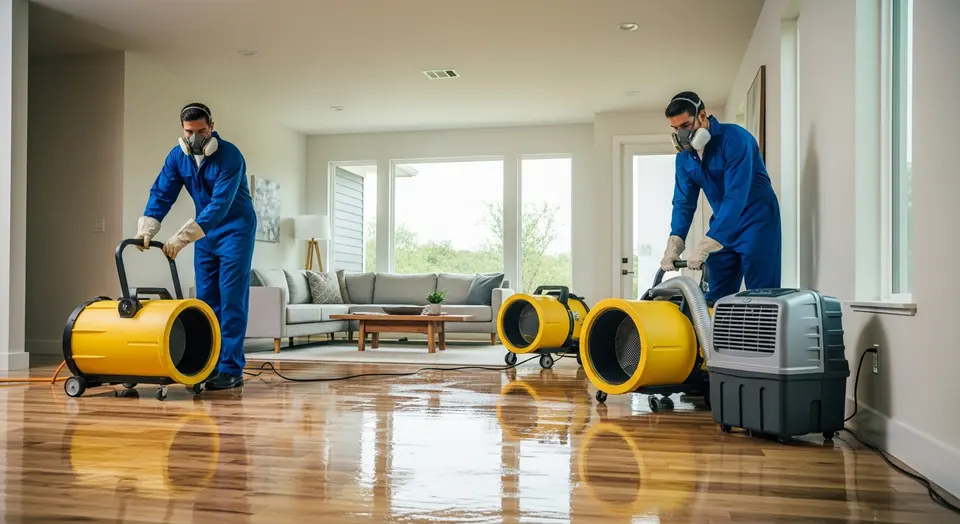
The right equipment makes a huge difference too. Strong truck-mounted extraction units pull more water out of carpets and padding than small machines. High-capacity dehumidifiers, air movers, moisture meters, and thermal cameras help find damp areas that are not obvious from the outside.
Evaluating Cleanup, Drying, and Mold Prevention Methods
Good water cleanup starts with a full inspection, not just a quick look at the obvious puddles. A careful technician should:
- Ask how long the water has been there and where it came from
- Check walls, ceilings, and floors with moisture meters
- Use thermal imaging when needed to spot hidden wet areas
- Explain what parts of the home are affected
Full Structural Drying vs Basic Removal
There is a big difference between simple water removal and full structural drying. Basic removal is just extracting standing water and maybe running a few fans for a day. Full drying is a planned process that can last several days and includes:
- Placing dehumidifiers and air movers in the right spots
- Taking regular moisture and humidity readings
- Adjusting or moving equipment based on those readings
- Leaving equipment in place until materials reach normal dry levels
Mold Prevention Steps
In Austin's climate, mold prevention is a key part of any water cleanup service. A careful team may:
- Apply antimicrobial treatments on affected surfaces
- Set up containment if there is known mold growth
- Use air filtration devices when needed to help manage air quality
- Follow clear mold remediation steps if mold is already present
The goal is not just to dry what you can see, but to stop future mold and odors from sneaking back once the equipment is gone.
Local Expertise Matters in Greater Austin Neighborhoods
Homes around greater Austin are not all built the same, and that changes how we plan drying. Many older bungalows have pier-and-beam foundations with crawl spaces, while other properties sit on concrete slabs. There are condos, townhomes, and lots of new construction with different materials and layouts. Local knowledge helps with things like:
- Drying crawl spaces under pier-and-beam homes without trapping moisture
- Handling slab homes where water can travel under flooring for long distances
- Working in multi-unit buildings where water can move between units and floors
Different areas around the city also face different water risks. Low-lying neighborhoods may see more flash flooding, homes near creeks and greenbelts are more exposed to rising water, and rapidly growing suburbs can have drainage or grading problems that send water toward houses.
Comparing Services, Costs, and Insurance Help
When you are comparing water cleanup service providers, helpful questions include:
- How fast can you get here and how long will the first visit take?
- What steps are included in your estimate and what might be extra?
- How long do you expect the drying process to last?
- How do you check for hidden moisture behind walls and under floors?
- How will you keep me updated while equipment is in my home?
Red Flags to Watch For
When it comes to cost, be careful with offers that sound much lower than others. Red flags can include:
- Bids that ignore full structural drying and only cover basic extraction
- Vague scopes of work that do not explain steps clearly
- Pressure to tear out more materials than needed or to agree to upgrades that do not relate to the damage
A quality company will document damage with before-and-after photos, moisture readings and logs, and itemized reports of work done — all of which help support insurance claims.
Take Control Fast After a Water Emergency
When water gets into your home, quick action keeps things from getting worse. A simple order of steps can help you stay calm:
- If it is safe, shut off the main water source if the issue is from plumbing
- Stay away from standing water near electrical outlets or appliances
- Take photos and short videos of affected areas before cleanup starts
- Move small items from wet areas if you can do it safely
- Call a local 24/7 water cleanup service as soon as possible
When water damage hits your home or business, every minute counts, and our team at Austin TX Water Damage is ready to act quickly. Our professional water cleanup service removes moisture, protects your property, and helps prevent costly long-term issues. Call (512) 222-8357 now for fast, reliable help.
Call (512) 222-8357A certified water damage restoration professional at Austin TX Water Damage, serving Central Texas homeowners and businesses with expert restoration services.
24/7 Emergency Service
Water damage emergency? We respond in 60 minutes, any time of day or night.
(512) 222-8357