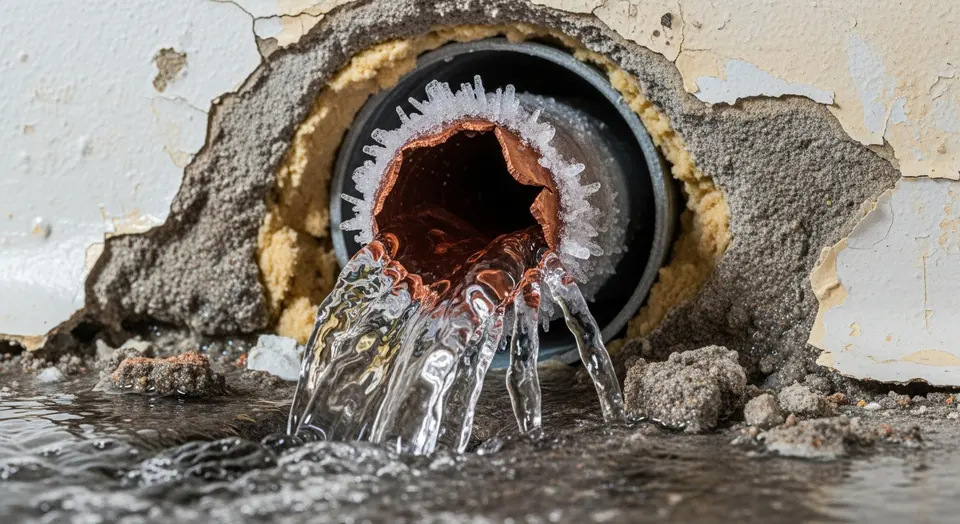
Winter Storm Uri in 2021 caused over $18 billion in damage across Texas, with burst pipes affecting hundreds of thousands of Austin homes. Here's how to protect your home — and what to do if it happens.
February 2021 changed how Austin homeowners think about winter. Winter Storm Uri brought unprecedented cold — temperatures as low as -2°F in parts of the Austin area — and caused catastrophic pipe freezing and bursting across the city. Estimates suggest over 1 million Texas homes experienced burst pipes during that event, with total damages exceeding $18 billion statewide. Austin, which had never experienced anything like it, was completely overwhelmed. Here's what every Austin homeowner should know.
Why Austin Homes Are Especially Vulnerable
Homes in warm-climate cities like Austin are designed differently than homes in northern climates where freezing temperatures are the norm. Austin plumbing is often routed through exterior walls, attics, and crawl spaces — areas that have minimal or no insulation against cold. In northern climates, plumbing is always routed through insulated, heated spaces. This fundamental design difference makes Austin homes far more vulnerable to pipe freezing even at temperatures that northern homeowners would consider mild.
Which Pipes Freeze First
Pipes in certain locations are at highest risk during freezes:
- Pipes in exterior walls — especially north-facing walls with minimal insulation
- Pipes in uninsulated attics — very common in Austin homes
- Pipes in crawl spaces and garages
- Pipes near exterior doors and windows
- Irrigation and outdoor hose bib lines
- Pool and spa plumbing
How to Protect Your Pipes Before a Freeze
When temperatures are expected to drop below 28°F in Austin, take these steps:
- Disconnect and drain outdoor hoses
- Cover outdoor faucets with foam insulating caps
- Open cabinet doors under sinks on exterior walls to allow warm air circulation
- Let cold water drip slowly from the faucet farthest from your main shutoff
- Keep your thermostat set to at least 55°F even when you're away
- Insulate accessible pipes in attics and crawl spaces before winter
- Know where your main water shutoff valve is
Signs a Pipe Has Frozen
A frozen pipe doesn't always burst immediately. Before the burst, you may notice: no water flow from a specific faucet during or after a freeze, frost visible on an exposed pipe, bulging or cracking in a pipe you can see. If you suspect a frozen pipe, do not use an open flame to thaw it. Use a hair dryer on low heat, warm towels, or a portable space heater. Never leave any heating device unattended.
If a pipe has already burst, shut off your main water supply immediately before the pipe thaws and begins releasing water.
What to Do When a Pipe Bursts
When a pipe bursts, every second counts. Follow this sequence: (1) Turn off your main water shutoff valve immediately. (2) Turn off your water heater. (3) Open faucets to relieve remaining pressure. (4) Call a water damage restoration company — not just a plumber. (5) Document all damage with photos before touching anything. (6) Start your insurance claim.
The Restoration Process After a Burst Pipe
A burst pipe typically releases several hundred to several thousand gallons of water depending on how quickly it's caught. Professional restoration involves complete water extraction, setting up industrial drying equipment, monitoring daily until materials reach dry standard, and then repairing or replacing damaged drywall, flooring, and cabinetry. The drying process alone typically takes 3–5 days with proper equipment.
A certified water damage restoration professional at Austin TX Water Damage, serving Central Texas homeowners and businesses with expert restoration services.
24/7 Emergency Service
Water damage emergency? We respond in 60 minutes, any time of day or night.
(512) 222-8357