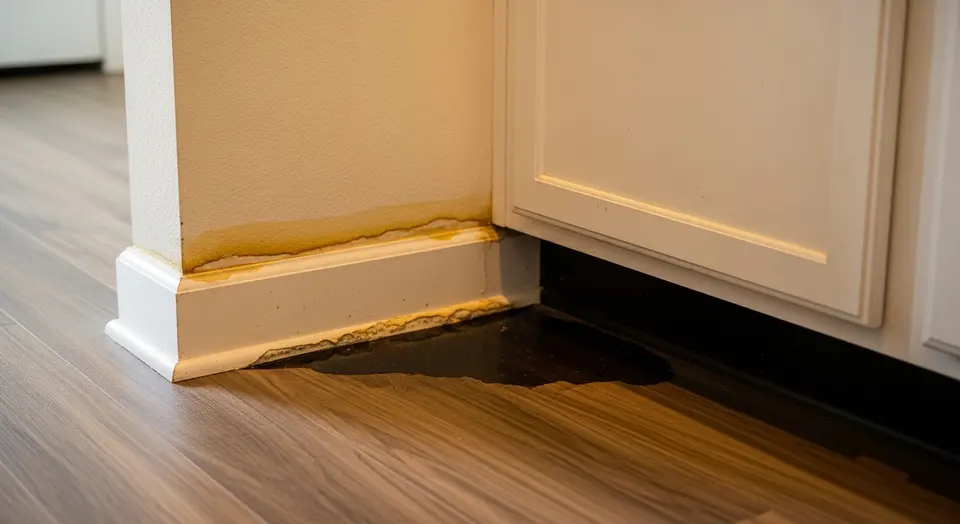
Even a slow leak under the sink can soak into drywall and framing where you cannot see it. Learn the key warning signs of hidden water damage — and when a mop and fan simply aren't enough.
Water in the wrong place almost never stays a "small" problem for long. Even a slow leak under the sink, a washing machine overflow, or water tracked in from a storm can soak into drywall, flooring, and framing where you cannot see it. When moisture lingers, it weakens materials, attracts pests, and sets the stage for mold to take hold behind finished surfaces.
In Austin, humidity and sudden heavy storms make this even more serious. Warm, moist air gives mold everything it needs, and once spores settle into damp building materials, they can spread quickly. Fast, professional water cleanup in Austin, TX helps stop that chain reaction, protecting both the structure of your home and the health of the people living in it.
The challenge is knowing when a mop and a fan are enough and when you need help from trained specialists.
Visible Red Flags Your Home Has Water Damage
Some of the earliest clues are right in front of you. Changes in color, texture, and condition on walls, ceilings, and floors often signal moisture where it does not belong.
Discoloration and Staining
Water stains are one of the most obvious signs. Yellow, brown, or dark blotches on ceilings, walls, and baseboards often start small, then slowly spread or deepen in color over time — pointing to an ongoing leak rather than a one-time splash.
You might also notice paint or wallpaper that bubbles, peels, or cracks. That usually means moisture is trapped behind the surface, pushing outward as it tries to escape. Warped or swollen trim, crown molding, or cabinets — especially around kitchens, bathrooms, and windows — is another clear indicator that water is getting into the wood or particleboard.
Flooring Changes You Should Not Ignore
Flooring reacts quickly to water. If you walk across an area and notice squishy, soft, or uneven spots on wood, laminate, or tile — especially near sinks, dishwashers, refrigerators, water heaters, or exterior doors — that soft feeling can mean the subfloor is saturated.
Other red flags include buckling, cupping, or separating floorboards, which often happen when water is trapped underneath. Carpet that stays damp, develops ripples, or has a musty smell even after cleaning or airing out is also a sign that moisture has reached the padding or subfloor below.
Odors and Indoor Air Quality Issues
Sometimes your nose will warn you before your eyes do. Persistent musty, earthy, or "old basement" smells that do not go away — even after cleaning or opening windows — often point to hidden moisture and mold activity. If the odor is strongest in one room, a closet, or under-sink cabinets, there is a good chance that area has ongoing dampness.
Many homeowners notice changes in how they feel indoors. Worsening allergies, headaches, or irritation in the eyes and throat can be tied to mold growth from unresolved water damage — especially when symptoms are worse at home than elsewhere.
Subtle Structural Signs Water Is Spreading
Not all signs are dramatic. Some of the more serious problems show up as small shifts in how your home looks and functions.
After a leak or storm, keep an eye on walls and ceilings. Hairline cracks that appear or spread around doors, windows, and ceiling joints can mean materials are expanding, contracting, or settling because they have taken on moisture. Doors and windows that suddenly start to stick, swell, or fail to close properly may have damp frames that are warping out of shape.
When the Water Source Matters
Not all water damage is the same. Water from a clean supply line break is very different from water that has backed up from a drain or entered through flooding.
Water that has come into contact with sewage, storm runoff, or standing outdoor water carries serious health risks. These sources can hold bacteria, chemicals, and other contaminants that are unsafe to handle without proper protection and disposal methods.
Water that has come into contact with sewage or storm runoff is considered Category 3 contaminated water. Do not attempt cleanup yourself — this requires professional protective equipment and safe disposal procedures.
Size and Location of the Affected Area
Even if the water is relatively clean at first, the scale and reach of the damage matter. Water that spreads across multiple rooms or levels, or seeps into wall cavities, attics, or crawlspaces, is extremely hard to fully dry with home equipment.
When insulation, subflooring, or framing becomes saturated, the moisture can linger deep inside materials. Repeated leaks in the same area are another strong sign that a hidden plumbing issue or chronic moisture intrusion is present, and that a more thorough inspection is needed.
Need for Advanced Equipment and Expertise
Professional water cleanup in Austin, TX relies on tools and training that go beyond consumer fans and shop vacs. Reputable restoration teams document the process with readings and photos, which can be critical if you are working with an insurance company on a water or flood claim.
- Commercial-grade extractors to pull out deep water from carpet and padding
- High-velocity air movers and dehumidifiers arranged in specific patterns for targeted drying
- Moisture meters and infrared cameras to locate damp spots behind walls and under floors
- Structured drying plans to return materials to safe moisture levels per IICRC S500 standards
What to Do While Waiting for Help
Time is one of the most important factors in any water incident. In Austin's warm, often humid climate, mold can start to develop within a couple of days after materials get wet. Fast professional response limits structural damage, helps protect health, and often keeps total repair costs lower.
While waiting for help, there are a few safe steps you can take:
- Shut off the water source or main supply if you can access it safely
- Avoid walking through standing water if the electricity is still on
- Move valuables, electronics, and light furniture out of affected areas
- Do not use household fans on contaminated or sewage water — they can spread germs and mold spores
At Austin TX Water Damage, we provide 24/7 emergency response, water extraction, structural drying, flood and sewage cleanup, and mold remediation across Austin and the surrounding counties. When you recognize the signs that DIY efforts may not be enough, call us at (512) 222-8357 — we respond in 60 minutes or less.
Call (512) 222-8357A certified water damage restoration professional at Austin TX Water Damage, serving Central Texas homeowners and businesses with expert restoration services.
24/7 Emergency Service
Water damage emergency? We respond in 60 minutes, any time of day or night.
(512) 222-8357