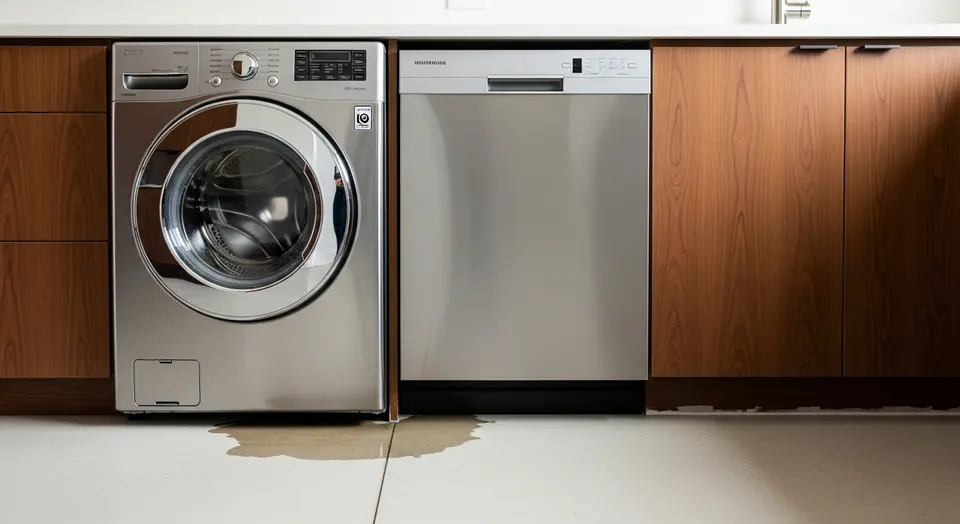
A slow drip from a dishwasher or washing machine can creep under floors and behind walls in hours. Learn how to spot early warning signs, handle basic appliance leak repairs, and know when to call a professional water damage team.
Water from a small appliance leak can move farther and faster than most people think. You leave for spring break or a quick weekend trip, and a slow drip from a dishwasher or washing machine keeps running the whole time. That little leak can creep under floors, soak into cabinets, and get behind walls before you even unpack your bags.
Austin homes are under extra stress in March. We have spring storms, plenty of moisture in the air, and steady AC use that can hide small drips. When humidity and unseen water mix, they create perfect conditions for mold and hidden damage.
Our goal is to help you stop that from happening. We want to show you how to spot early warning signs, how basic appliance leak repair is handled, and when it is time to bring in a professional water damage team so things do not get worse.
The Most Leak-Prone Appliances in Austin Homes
Some appliances are repeat offenders when it comes to leaks in Austin homes. A few areas deserve regular attention because they deal with water every day.
- Washing machines
- Dishwashers
- Refrigerators with ice makers or water dispensers
- Water heaters
- HVAC and AC units with condensate lines
How Problems Often Start
Each appliance has its own failure points worth knowing:
- Washing machines: Hoses at the back can crack or pop off, and drain lines can clog. Leaks usually show up as puddles or damp flooring behind or beside the machine.
- Dishwashers: Door seals can fail, drain lines can loosen, or the unit can overfill. You may first see dampness along the kick plate, warped toe-kicks, or soft spots in nearby cabinets.
- Refrigerators: The water line to the ice maker or dispenser can loosen or split. Water may run under the fridge, then under tile, and slowly spread to nearby walls.
- Water heaters: Tanks can rust, valves can leak, and connections at the top can loosen. Early signs include a small wet ring at the base, rust stains, or moisture on nearby walls.
- HVAC and AC condensate lines: Drain lines can clog with debris, causing pans to overflow. You might notice ceiling spots under an attic unit or damp drywall near an interior closet unit.
Hidden Water Paths in Texas Homes
In many Texas homes, water has plenty of hidden paths it can take:
- Move underneath tile or vinyl flooring
- Run behind baseboards and trim
- Drip through second-story floors into ceilings below
Because of these hidden routes, an "easy" appliance leak repair on the surface may not address water that has already spread into other areas. That is where trained water damage pros are often needed.
Simple Weekly Checks to Catch Leaks Early
A quick weekly walk-through can make the difference between a tiny fix and a large water damage problem. You do not need tools or special skills, just a few minutes and a sharp eye.
Take 5 to 10 minutes once a week and:
- Look at the floors around washing machines, dishwashers, and refrigerators. Check for dampness, soft or bouncy spots, lifted edges, or discolored grout.
- Open nearby cabinets and feel the bottom panels. Warped wood, bubbling, or swelling can point to a slow leak.
- Check walls and baseboards around water heaters and AC closets for stains, peeling paint, or swollen trim.
- Take a quick smell test. A musty or sour odor can be an early sign of moisture and mold growth.
Easy Checks Without Moving Appliances
- Slide a dry paper towel or cloth under the front edge of appliances. If it comes back damp or cool, there may be a slow seep.
- Gently feel around water connections, like behind the washer or near the fridge line, if accessible without moving heavy units.
When leaks are caught early, what people think of as "appliance leak repair" often means very small corrections — tightening a supply line, replacing a worn hose, or clearing a simple drain clog. If you see something that looks off, have a professional check for hidden moisture before it spreads.
Preventive Upgrades That Save Austin Homeowners Money
A few smart upgrades can lower your risk and stress. These steps help catch leaks early or stop them before they pour water across your floors.
- Replacing old rubber washer hoses with braided stainless steel hoses
- Adding drip pans under washing machines and water heaters where possible
- Placing simple leak alarms under or near major appliances
- Using auto-shutoff valves for washing machines and water heaters when available
Why Spring Is the Right Time for This
Spring is a smart time for this kind of work. Many people are thinking about travel, family visits, and longer days away from home. Before heavy AC use kicks into high gear, it helps to know your appliances and drain lines are in good shape.
These small upgrades are usually far cheaper than dealing with:
- Full water extraction
- Structural drying of walls, ceilings, and subfloors
- Professional mold remediation
- Repair or replacement of floors, cabinets, and drywall
When a Leak Becomes an Emergency Situation
Sometimes a leak has already turned into a mini flood by the time you notice. Standing water on the floor, dripping ceilings, or water running out from under an appliance are all warning signs that you need fast action.
Immediate Steps If You Discover Active Water
- Safely turn off the appliance, if you can reach the controls without stepping into deep water.
- Turn off the water supply valve to that appliance. For washing machines and toilets, this is usually on the wall behind the unit. For water heaters there are valves on the incoming line.
- If water is near electrical outlets or cords, do not touch switches or plugs — have a professional handle power concerns.
When to Step Back and Call a Professional
Knowing where DIY stops and professional help starts is very important. Small, slow drips from a visible hose may be handled by tightening or replacing that part. But when walls, ceilings, or flooring are soaked, the problem is no longer just an appliance issue — it becomes a water damage and mold risk issue that calls for professional water extraction and structural drying.
Austin's warm, humid climate gives mold what it needs to start forming on damp materials quickly, especially if air is trapped in closed spaces. Once water gets into wall cavities, under floors, or into insulation, the safest choice is to bring in trained help to check moisture levels, dry hidden areas, and handle any mold concerns before they grow.
If you suspect a leak from your dishwasher, washing machine, refrigerator, or water heater, our team at Austin TX Water Damage is ready to help before minor moisture turns into major damage. We offer fast, professional water damage restoration to stop the water at the source and start drying your home right away. Call us now — we respond in 60 minutes or less, 24/7.
Call (512) 222-8357A certified water damage restoration professional at Austin TX Water Damage, serving Central Texas homeowners and businesses with expert restoration services.
24/7 Emergency Service
Water damage emergency? We respond in 60 minutes, any time of day or night.
(512) 222-8357