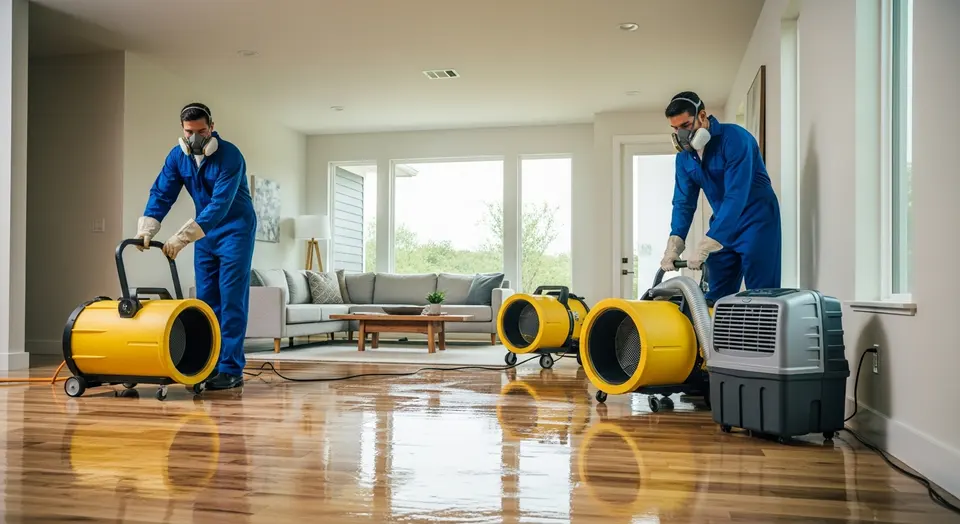
When a pipe bursts or storm water enters your home, damage starts immediately. Here's exactly what happens during professional water cleanup in Austin — from the first safety check to final drying and mold prevention.
Water on your floors or coming through the ceiling can turn a normal day into a long, stressful one. When a pipe bursts or a heavy spring storm sends water into your home, damage starts right away. Fast, professional water cleanup in Austin, TX helps stop that damage from spreading and protects your home, your belongings, and your health.
Here, we walk through what actually happens during professional water cleanup so you know what to expect. Understanding the steps can make a scary situation feel a little more under control and help you act with confidence when every minute counts.
Fast Action That Protects Your Austin Home
A sudden pipe break, a leaking water heater, or storm water seeping through doors can soak floors, walls, and furniture in very little time. Many homeowners are surprised by how quickly water can move under baseboards, into cabinets, and through ceiling spaces.
Quick, professional help matters because:
- Water can weaken building materials
- Moisture can linger inside walls and under flooring
- Odors and mold can start if things stay damp
- Personal items may be harder to save if they stay wet
In Austin, spring often brings periods of heavy rain. Roof issues, clogged drains, and overwhelmed gutters can lead to water intrusion. Professional water cleanup is a step-by-step process designed to protect the structure of the home, personal belongings, and indoor air quality. Local teams are used to Austin's mix of older homes, newer builds, and everything in between, and understand how our climate and building styles affect water damage.
First Steps When the Team Arrives
When a professional crew arrives, the first focus is always safety. Standing water and soaked building materials can hide hazards you might not see at first glance.
The team will usually:
- Check for electrical risks, such as outlets or cords near water
- Look for sagging ceilings or weak flooring
- Ask about the source of water and when it started
- Decide if the water could be contaminated
Initial Assessment and Documentation
Next comes an initial assessment. The technicians will work to find where the water came from and whether it is clean, gray, or black water. Clean water might be from a supply line leak, gray water could be from appliances, and black water might be from sewage or storm runoff.
They will examine:
- Floors, carpets, and rugs
- Walls, baseboards, and ceilings
- Cabinets, closets, and insulation
During this step, they also document the damage with photos, moisture readings, and written notes. That record can help you when you talk with your insurance company. Local teams can often spot hidden trouble areas quickly because they handle common Austin issues like slab leaks, AC condensate overflows, and storm-related drain problems regularly.
Water Extraction and Moisture Removal Explained
Once the area is safe and the damage is assessed, the priority is getting the water out. The faster standing water is removed, the less time it has to soak deeper into your home.
Professionals use powerful pumps and truck-mounted or portable extractors to pull out water from:
- Hard floors
- Carpets and pads
- Tile and grout
- Other wet surfaces
Finding Hidden Moisture
This equipment can remove water much faster than typical consumer tools. But the job is not finished when the visible water is gone. Moisture loves to hide in wall cavities, under flooring, in subfloors, and behind cabinets.
To find this hidden moisture, the team may use:
- Moisture meters to test how wet materials are
- Infrared cameras to spot cooler, damp areas inside walls
- Probes to check under flooring or behind baseboards
Controlled Structural Drying
After that, they set up commercial-grade air movers and dehumidifiers. Air movers push air across wet surfaces to help them dry, while dehumidifiers pull moisture out of the air. This controlled drying process helps stop:
- Swelling or warping of wood
- Buckling of floors
- Peeling paint and damaged drywall
In Austin's humid climate, proper drying is especially important. If moisture is left behind, you may notice lingering dampness, musty smells, or soft spots later. Professional drying aims to bring materials back to normal moisture levels so the home feels dry again, not just "less wet."
Cleaning, Sanitizing, and Protecting Your Belongings
Once extraction and drying are underway, the focus turns to cleaning and deciding what can be saved. Not every wet material is safe to keep, especially after gray or black water exposure.
Technicians will sort materials into things that can be cleaned and restored and things that should be removed. For example:
- Some carpets, rugs, and upholstery may be cleaned and dried
- Certain drywall and trim can sometimes be dried in place
- Soaked insulation usually needs to be removed
- Heavily damaged carpet padding often has to be taken out
Disinfection and Odor Control
When water is from storms, drains, or sewage, careful cleaning and disinfection is important. The team may use professional disinfectants on floors, walls, and other hard surfaces. This step helps reduce bacteria and other contaminants left behind after dirty water.
Odor control is also part of the process. Technicians may:
- Use HEPA vacuuming to remove fine particles
- Apply antimicrobial treatments to vulnerable areas
- Use specialized methods to treat stubborn odors
In some cases, a professional company may recommend a pack-out of salvageable contents — carefully packing, labeling, and moving items to another location for cleaning and safe storage. Removing those items from the work area can speed up structural drying and protect the things that matter most to you.
Mold Prevention and Follow-up in Austin's Climate
Austin's warm, often humid air can be tough on damp homes. That is why mold prevention is built into every step of professional water cleanup in Austin, TX. The goal is not only to fix the current problem, but also to prevent a second one from starting.
Proactive steps may include:
- Rapid removal of wet, non-salvageable materials
- Tight control of temperature, airflow, and humidity during drying
- Targeted antimicrobial application on surfaces that stayed wet
Warning Signs to Watch For After Cleanup
Even after cleanup, it is smart to keep an eye on the space. Warning signs to watch for in the days and weeks that follow include:
- New or persistent musty odors
- Discoloration or spotting on walls or ceilings
- Peeling paint or bubbling drywall
- Allergy-like symptoms that show up mostly at home
Professional teams often recommend follow-up moisture checks, especially in areas that were heavily affected. If mold is suspected, they can discuss next steps for mold remediation and help you understand what is needed to get your home back to a healthy state.
Take Control Quickly with Local Water Damage Experts
Water damage moves fast, but so does a trained response. When you understand the basic steps, the process feels less overwhelming. Professional water cleanup in Austin, TX usually follows a clear path: safety and assessment, water extraction, deep drying, cleaning and sanitizing, and then follow up and prevention.
Acting quickly can be the difference between drying out a room and having to tear out large sections of flooring and walls. Local teams that know Austin's homes, common water issues, and humid climate can respond with the right tools and the right plan. By getting help early, you protect your health, your home's structure, and the value you have built over time.
If you are dealing with flooding, leaks, or soaked floors, our team at Austin TX Water Damage is ready to help restore your property quickly and safely. Do not wait for moisture to cause mold or structural damage — reach out today and we will respond right away.
Call (512) 222-8357A certified water damage restoration professional at Austin TX Water Damage, serving Central Texas homeowners and businesses with expert restoration services.
24/7 Emergency Service
Water damage emergency? We respond in 60 minutes, any time of day or night.
(512) 222-8357