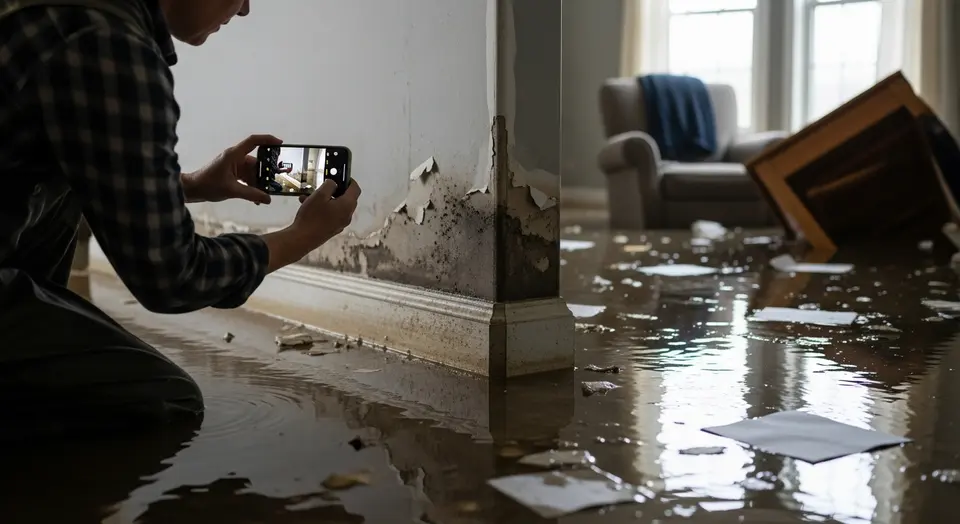
Poor documentation is the number one reason water damage insurance claims are underpaid or denied. Here's the professional approach to documenting water damage that results in fair, fast claim settlements.
Insurance companies process thousands of water damage claims every month. The claims that get paid quickly and fairly are the ones that arrive with complete, professional documentation. The claims that get delayed, reduced, or denied are typically the ones with vague descriptions, missing photos, and no professional moisture data. Here's exactly how to document water damage to protect your claim — from the moment you discover the damage through the final settlement.
The Golden Rule: Document Before You Touch Anything
Before moving furniture, pulling up carpet, or starting any cleanup, document the scene completely. Insurance adjusters need to see the original condition of damage — not after you've started mitigating it. Take photos of every affected room from multiple angles, every damaged item, all water sources (the broken pipe, the overflowed appliance), and any materials showing water damage or staining.
Record a continuous video walkthrough on your phone, narrating what you see. 'This is the kitchen, water came from the dishwasher supply line here, you can see it spread to the hardwood flooring here and up the cabinet base here...' This video is often worth more than photos.
What to Photograph
Document all of the following:
- The water source (broken pipe, failed appliance, entry point)
- All affected rooms — wide shots showing full extent
- Close-ups of wet materials: carpet, hardwood, drywall, baseboards
- Any standing water or visible moisture
- All personal property in the affected area
- Pre-existing conditions (note anything that existed before the loss)
- Serial numbers and model numbers of damaged appliances
Why Professional Moisture Readings Matter
Photos show what's visibly damaged. Moisture meter readings show what's invisibly damaged — the water inside walls, under floors, and in ceiling assemblies that you can't see but your insurance company is responsible for. A professional restoration company will take moisture readings throughout the affected area and log them daily. These readings are required by most insurance companies and serve as proof of the extent of damage and the effectiveness of drying.
Xactimate: The Insurance Industry Standard
Xactimate is the estimating software used by insurance companies and restoration contractors to price water damage repairs. When your restoration contractor prepares a scope of loss in Xactimate, it speaks directly the language of your insurer. Line items include specific materials, regional pricing, and labor rates. When a non-certified contractor provides a handwritten estimate, it often doesn't contain the detail insurers need — causing delays and disputes.
The Supplementation Process
Insurance adjusters sometimes miss damage or apply incorrect pricing. A good restoration company will identify discrepancies between the insurer's estimate and the actual scope of work and submit supplements — additional line items supported by documentation. Supplement management is a skill, and experienced restoration companies have full-time insurance coordinators who handle this process.
Don't Throw Anything Away
Damaged materials — carpet, drywall, flooring, furniture, personal property — should be preserved until your insurance adjuster has inspected the property and your claim has been documented. Taking photos of items before disposal is the minimum. For large items, keep them in your garage or driveway for the adjuster to inspect in person. Disposal of damaged materials before the adjuster visits can give the insurer grounds to reduce your claim.
A certified water damage restoration professional at Austin TX Water Damage, serving Central Texas homeowners and businesses with expert restoration services.
24/7 Emergency Service
Water damage emergency? We respond in 60 minutes, any time of day or night.
(512) 222-8357