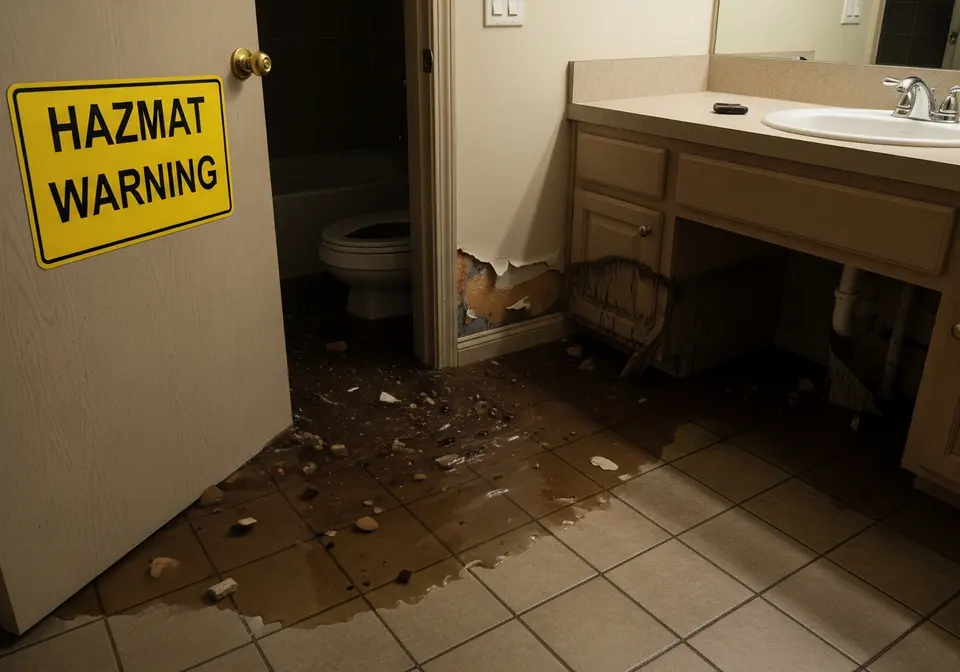
A sewage backup spreads dirty water, germs, and bad odors through your home in minutes. Learn the safety steps, professional cleanup process, and insurance tips every Austin homeowner should know.
Sewage damage cleanup is one of those home problems no one wants to think about, but it matters a lot when it hits. A backup can spread dirty water, germs, and bad odors through your home in a short time, especially during our busy spring storm season in Austin. Knowing what to do in the first minutes and hours can protect your family's health and save more of your home.
We want to walk you through what sewage backups really are, why they are more dangerous than regular leaks, and what safe, smart cleanup looks like — covering health risks, first steps, professional cleanup, mold and structural problems, and how insurance fits in.
When Sewage Backups Strike Your Austin Home
A sewage backup happens when dirty water from toilets, drains, or sewer lines flows back into your home instead of moving out. This is not the same as a clean water leak from a sink line. Sewage is often called black water, and it carries germs, waste, and other contaminants that can spread through floors, walls, and belongings.
In Austin, heavy spring rains and strong storms can overload sewer lines and cause sudden backups. That standing water sits in warm, humid air, and damage can grow fast. Acting quickly and wisely can:
- Lower health risks for your family
- Save more of your flooring, walls, and belongings
- Cut down how long your home is disrupted
Health Risks You Cannot Ignore with Sewage Damage
Sewage water is full of things you do not want in your living room or bedroom. It can contain:
- Bacteria like E. coli and Salmonella
- Viruses that affect the stomach and breathing
- Parasites
- Chemicals and household waste from drain lines
Children, older adults, and people with asthma or weak immune systems are at higher risk when exposed. Even short contact can cause problems.
Common Symptoms After Exposure
- Skin irritation or rashes
- Coughing, wheezing, or trouble breathing
- Upset stomach, nausea, or diarrhea
- Headaches and feeling tired
When to Stay Out of the Affected Area
It can be unsafe to stay in the home or in certain rooms if:
- There is strong sewage odor that will not go away
- You see visible waste or dark water on floors or walls
- Mold spots or musty smells appear within 24 to 48 hours in damp areas
When in doubt, it is safer to keep people and pets away from the affected space until it is properly cleaned.
First Steps When Sewage Floods Your House
Safety comes before saving stuff. When you notice sewage backing up, try to stay calm and follow a simple checklist. If it is safe to do so:
- Shut off electricity to the affected area to avoid shock
- Avoid walking through standing sewage water
- Keep kids and pets completely out of the space
- Open doors and windows if you can do it without spreading contamination
What NOT to Do During Sewage Cleanup
- Do not use a wet-dry vacuum on sewage water
- Do not try DIY disinfection on large or soaked areas
- Do not run household fans that can blow germs around
- Do not run the HVAC system, which can pull contaminated air into ducts
Information to Gather Before Calling
Before you call a professional restoration company, gather some helpful details:
- Where did the backup start, like a toilet, tub, or floor drain?
- How far has the water spread through rooms or levels?
- How deep is the water, a thin layer or several inches?
- How long has the water been sitting there?
This information helps the team come prepared with the right tools and plan.
Professional Sewage Damage Cleanup in Austin Homes
Professional sewage damage cleanup is much more than just mopping up dirty water. A complete service usually includes:
- Inspection and safety assessment
- Containment so contamination does not spread to clean areas
- Removal of standing water and damaged materials
- Deep cleaning and disinfection of all affected surfaces
- Thorough drying of floors, walls, and structural areas
- Final safety checks before the space is used again
IICRC-certified teams use specialized tools that most homeowners do not have, including commercial-grade extractors, negative air machines and HEPA filtration, antimicrobial treatments, and moisture meters that find hidden damp spots in walls and subfloors.
Preventing Mold and Structural Damage After Sewage
Once the standing sewage is removed, the job is not over. Our warm, often humid weather gives mold a perfect place to grow if moisture is left behind. Even small damp pockets in wall cavities or under flooring can turn into a problem. If sewage-soaked materials are not removed and dried correctly, you can see:
- Warped or buckled flooring
- Rotted or weakened framing and subfloors
- Stained and crumbling drywall
- Long-lasting sewage odors that are hard to hide
A professional team will work to protect as much structure as possible while still removing what cannot be cleaned. Moisture readings are taken in different layers — baseboards, wall studs, and underlayment — to confirm things are truly dry, not just dry on the surface.
Sewage Damage Cleanup and Your Home Insurance
Sewage backups can be confusing when it comes to insurance. Many homeowners policies handle water damage differently depending on the source. A backup through a drain or sewer line may only be covered if you have a special sewer and drain backup endorsement on your policy. To support any claim, it helps to document as much as you safely can:
- Photos and videos of all affected rooms and items
- Itemized lists of damaged belongings
- Notes on when you first noticed the backup
- Receipts for hotel stays or temporary housing if you had to leave the home
A restoration company that works with insurance claims on a regular basis can prepare detailed reports and estimates and share information directly with adjusters, which often helps move claims along.
When to Call for Emergency Help
Homeowners should get emergency help any time they see visible sewage, notice foul, sewage-like odors with wet floors, or find multiple drains backing up at once. During the first visit, you can expect a safety check, a clear plan for extraction and cleanup, and steps to protect the rest of your home while work starts.
When sewage backs up, every minute counts, and our team at Austin TX Water Damage is ready to act quickly. We use proven methods to remove contamination, sanitize affected areas, and help prevent long-term damage. Call (512) 222-8357 now so we can assess your situation and start restoring your property safely.
Call (512) 222-8357A certified water damage restoration professional at Austin TX Water Damage, serving Central Texas homeowners and businesses with expert restoration services.
24/7 Emergency Service
Water damage emergency? We respond in 60 minutes, any time of day or night.
(512) 222-8357