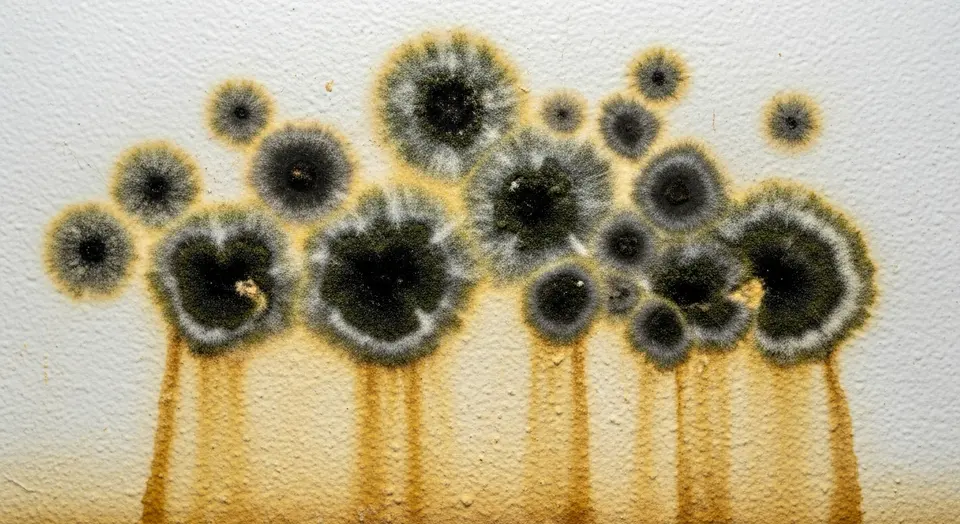
Mold can begin growing within 24–48 hours of water damage. Austin's warm climate makes it especially fast. Learn to recognize the signs and understand when you need professional remediation.
Austin's warm climate — with summer temperatures regularly topping 100°F and humidity that spikes dramatically during storm season — creates an ideal environment for mold growth. After any water damage event, mold can begin colonizing wet materials within just 24–48 hours. It doesn't announce itself. It grows quietly behind drywall, under flooring, and inside wall cavities — often invisible until the infestation is significant. Here's how to recognize the warning signs and what to do about them.
Visible Signs of Mold
The most obvious sign of mold is visible growth — typically appearing as black, green, white, or gray spots or fuzzy patches. Mold often appears in corners, along baseboards, under sinks, around window frames, and on ceiling tiles. Black mold (Stachybotrys) is one of the most concerning types and often appears glossy or wet-looking with a dark greenish-black color. However, mold color alone doesn't tell you how dangerous it is — any mold growth after water damage should be professionally assessed.
Musty, Earthy Odor
Mold produces microbial volatile organic compounds (MVOCs) as it grows, which create a distinctive musty or earthy smell. If your home smells like a damp basement, wet cardboard, or old books — especially in areas that previously had water damage — you likely have mold growth somewhere, even if you can't see it. The smell is often strongest in enclosed spaces: closets, crawl spaces, under cabinets.
If you smell mold but can't see it, it's almost certainly growing inside walls, under flooring, or in the HVAC system. Don't ignore the smell.
Health Symptoms in Occupants
Mold exposure can cause a range of health symptoms, especially in people with allergies, asthma, or compromised immune systems. Watch for symptoms that improve when you leave home and return when you come back — this pattern is a strong indicator of indoor air quality issues:
- Persistent sneezing, coughing, or runny nose
- Eye, nose, or throat irritation
- Skin rashes or hives
- Worsening asthma symptoms
- Headaches or difficulty concentrating
- Fatigue that improves when away from home
Warped, Stained, or Bubbling Surfaces
Drywall, wood flooring, and paint that has been wet and then dried often shows physical signs of previous moisture: staining (yellow, brown, or gray discoloration), bubbling or peeling paint, warped baseboards or door frames, and buckled flooring. These signs indicate moisture damage that may have already caused mold growth inside the wall or floor assembly.
Staining on walls or ceilings after a water event means moisture has soaked into the material. Even if it looks dry on the surface, the interior may still be wet and growing mold.
When to Call a Professional
If you see mold covering an area larger than 10 square feet (roughly 3 feet by 3 feet), if the mold is in your HVAC system, if it's the result of sewage or Category 3 water, or if any occupants are experiencing health symptoms, call a professional mold remediation company. DIY mold removal with bleach sprays is largely ineffective on porous materials like drywall and can actually spread spores throughout the home if done incorrectly.
The Remediation Process
Professional mold remediation involves: (1) containment of the affected area with plastic sheeting and negative air pressure to prevent spore spread, (2) removal of all mold-contaminated porous materials, (3) HEPA vacuuming and antimicrobial treatment of all surfaces, (4) air scrubbing with HEPA filtration, and (5) post-remediation clearance testing to confirm successful removal. Skipping any of these steps leaves the problem unsolved.
A certified water damage restoration professional at Austin TX Water Damage, serving Central Texas homeowners and businesses with expert restoration services.
24/7 Emergency Service
Water damage emergency? We respond in 60 minutes, any time of day or night.
(512) 222-8357