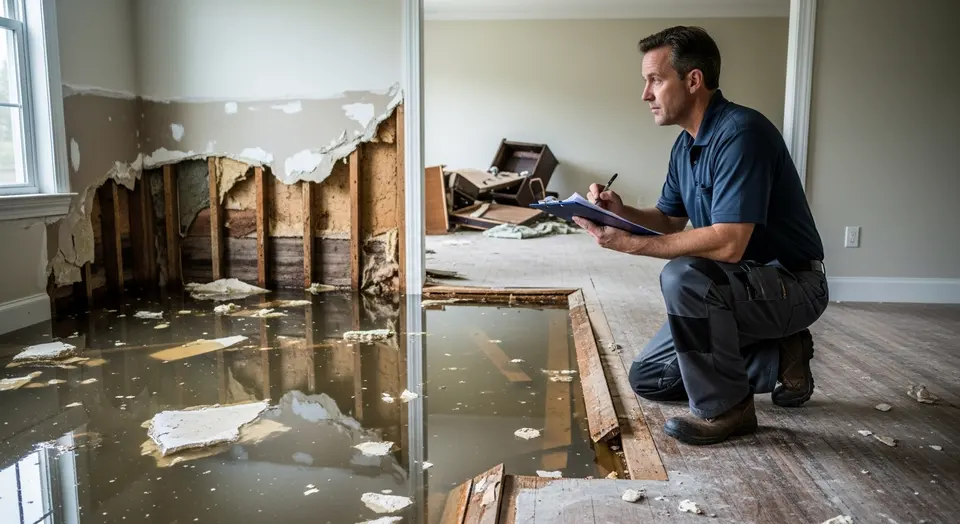
A burst pipe that's addressed within an hour might cost $2,000. The same pipe left for 24 hours can cost $15,000 or more. Here's the real math on water damage costs — and why every minute matters.
Water damage is one of the most expensive and most preventable home disasters. According to industry data, water damage and freezing are the second most common homeowners insurance claim — behind wind and hail damage. The average claim is $11,000–$13,000. But the final cost is almost entirely determined by one thing: how fast you respond. Here's the real math on water damage costs.
The Timeline of Water Damage
Water damage follows a predictable progression. Understanding this timeline helps explain why every hour of delay increases costs:
- Minutes 0–30: Water spreads across floors, soaks into carpet and padding
- Hours 1–2: Drywall begins absorbing moisture, furniture legs stain floors
- Hours 3–12: Drywall swells and deteriorates, metal surfaces begin to corrode, structural wood begins absorbing moisture
- Hours 13–24: Mold risk begins, paint begins to peel, wood floors buckle
- Days 2–7: Mold growth accelerates, structural materials severely compromised
- Day 7+: Mold infestation likely, structural integrity at risk
Average Water Damage Costs in Austin
Restoration costs in Austin vary significantly based on severity, scope, and how quickly response happens. Here are typical ranges for common scenarios:
- Minor leak (contained, caught quickly): $500–$1,500
- Water heater failure (single room): $1,500–$4,000
- Burst pipe with rapid response: $2,000–$5,000
- Burst pipe with 24-hour delay: $8,000–$20,000
- Category 2 (gray water) flooding: $5,000–$15,000
- Category 3 (sewage/flood water): $10,000–$30,000+
- Water damage with mold: $15,000–$50,000+
Why Delay Multiplies Cost
The cost escalation with delay comes from several compounding factors. First, water migrates — it follows gravity and capillary action into adjacent materials, spreading the affected area. Second, porous materials absorb moisture rapidly, requiring replacement rather than drying. Third, mold adds a remediation component to what would otherwise be a drying job. Fourth, secondary damage compounds: swollen doors, buckled floors, failed paint — each requiring separate repair.
The cost difference between an immediate response and a 24-hour delayed response is typically 3–5x. Insurance deductibles aside, the out-of-pocket impact of delay can be enormous.
What Insurance Pays — And What It Doesn't
Standard homeowners insurance covers sudden and accidental water damage. However, insurance companies may reduce or deny claims for damage that could have been prevented or mitigated. If you had a slow leak you ignored, or if you delayed calling for professional help, the insurer may argue that some damage was preventable. 'Failure to mitigate' is a real basis for claim reduction.
Prevention: The Cheapest Solution
The most cost-effective approach to water damage is prevention. Annual plumbing inspections (especially for homes over 15 years old), monitoring water pressure, replacing supply lines every 5 years, insulating pipes before freezes, and installing water leak detectors under sinks and near appliances can prevent the most common causes of water damage in Austin homes.
A certified water damage restoration professional at Austin TX Water Damage, serving Central Texas homeowners and businesses with expert restoration services.
24/7 Emergency Service
Water damage emergency? We respond in 60 minutes, any time of day or night.
(512) 222-8357